Home › Resources › Texas Laser Operator Rules
Texas Laser Operator Rules: Who May Perform Laser Treatments in a Med Spa
Not legal advice. Last reviewed November 2026. Laws and rules change; confirm your situation with the agency or a Texas healthcare attorney.
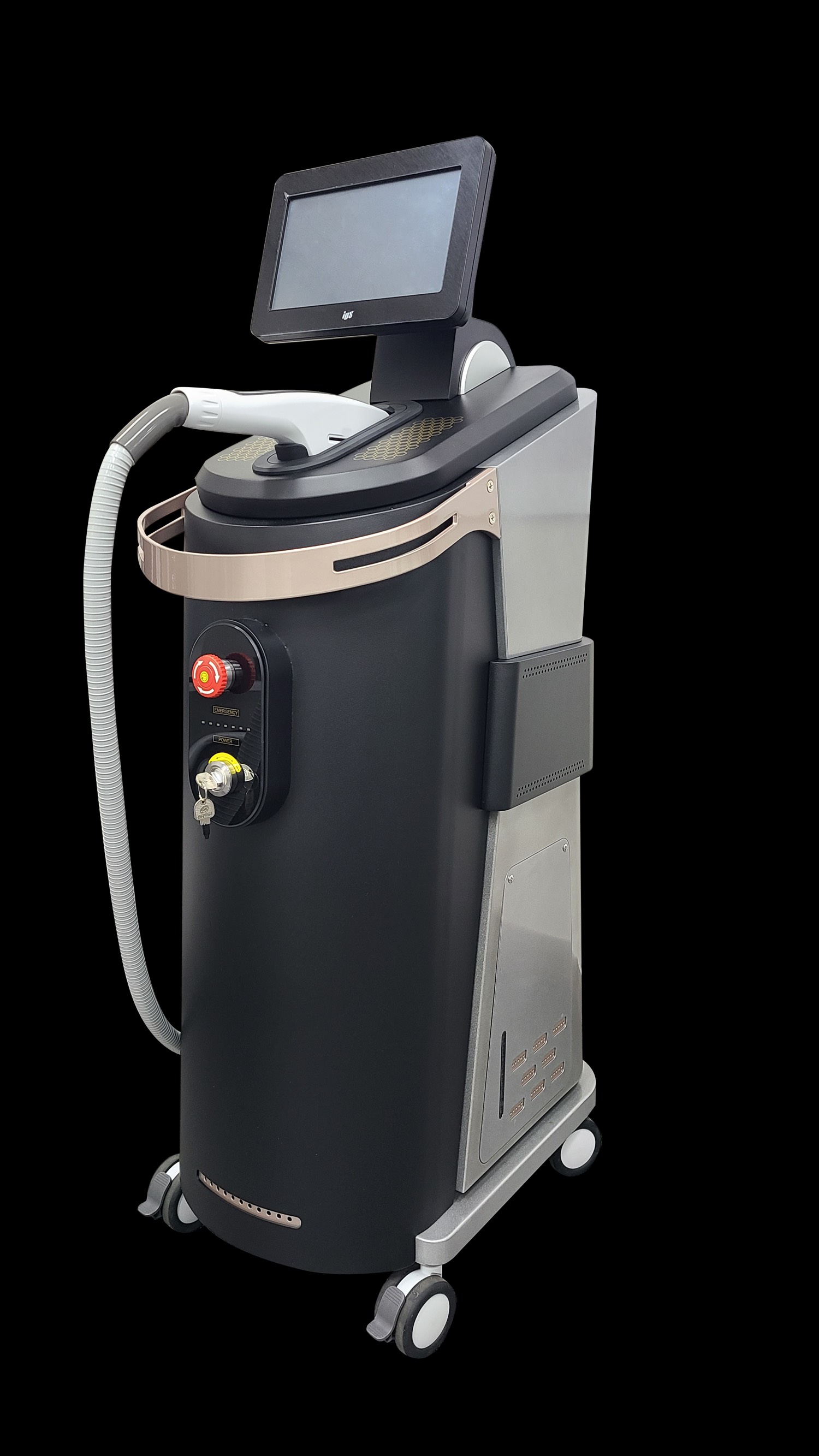
Before a Texas practice buys a laser or IPL system, it needs to know who may use it, and under what arrangement. Texas splits the answer in two. Laser hair removal has its own certificate and facility license, run by the Texas Department of Licensing and Regulation (TDLR). Most other cosmetic uses of a prescription device fall under the Texas Medical Board's delegation rules.
This guide summarizes the official statutes, rules and agency pages, with links. We sell aesthetic devices, not legal services. Where the sources leave a question open, we say so.
The short version
- Laser hair removal needs a TDLR certificate at one of four tiers, plus a facility license and a consulting physician contract, unless an exemption applies [S1][S2].
- Physicians and their delegates are outside that program; delegation follows Occupations Code ch. 157 [S1][S5].
- Other cosmetic uses of a prescription medical device are the practice of medicine under Texas Medical Board rules, delegable under written orders [S6][S8].
- DSHS registers businesses that use Class 3B and 4 lasers [S10].
Rules at a glance
| Treatment or activity | Governing law or rule | What the source says is required | Source |
|---|---|---|---|
| Laser hair removal (nonablative, laser or pulsed light) | Texas Health and Safety Code ch. 401, subch. M; 16 TAC ch. 118 (TDLR) | An individual TDLR certificate at the right tier; a facility license for each location; a consulting physician contract | [S1][S2][S3][S12] |
| Laser hair removal by a physician, or a physician's employee or delegate | Health and Safety Code §401.504(d); Occupations Code ch. 157 | Subchapter M does not apply; delegation follows Occupations Code ch. 157 | [S1][S5] |
| Laser hair removal by another licensed health professional | Health and Safety Code §401.504(c) | No TDLR certificate if laser hair removal is within that professional's scope, as decided by their own licensing board | [S1][S3] |
| Laser procedures beyond hair removal (for example, tattoo removal) | TDLR directs you to DSHS and the Texas Medical Board; 22 TAC §§169.25–169.28 | Cosmetic use of a prescription medical device is the practice of medicine and may be delegated under the TMB's training, written-order, supervision and posting rules | [S4][S6][S7][S8][S9] |
| Using a laser or pulsed light device to treat an illness, disease, injury, defect or deformity | Health and Safety Code §401.521 | Only a physician, a person acting under a physician's order, or a person authorized by other law | [S1] |
| A business using Class 3B or 4 lasers | DSHS Radiation Control Program | A DSHS certificate of registration for laser use, including Laser Safety Officer information | [S10] |
Laser hair removal: the TDLR program
Texas law defines laser hair removal as "the use of a laser or pulsed light device for nonablative hair removal procedures," and a nonablative procedure as one that "does not remove the epidermis" [S1]. TDLR's own pages say that laser hair removal devices are "any lasers or IPL's used for removing hair" [S3]. So an IPL used for hair removal falls under the same program as a laser.
The certificate "only authorizes a person to perform nonablative cosmetic laser hair removal," not diagnosis or treatment of disease or injury, and holders must disclose that limitation in writing to clients [S1].
The four certificate tiers
TDLR's program summary describes the tiers this way [S2]:
- Apprentice-in-Training. At least 18 years old, with an agency-approved 40-hour course from a TDLR-approved training provider. That is 24 hours on device safety, laser physics, skin typing, treatment protocols, burns, eye protection and emergencies, plus 16 hours on CPR, client history, signage, device use and anesthesia. An apprentice works directly under a Senior Technician or a certified Professional.
- Technician. Holds an apprentice license and has performed at least 100 procedures as an apprentice within 12 months of applying, directly supervised by a Senior Technician or certified Professional.
- Senior Technician. Holds a technician license and has supervised at least 100 procedures as a technician within 12 months of applying, audited by a certified Professional.
- Professional. Holds a senior technician license, passes a department-approved exam through an approved certifying entity, and stays certified by that entity.
Licenses are valid for two years, and individual applicants must pass a criminal history background check [S2].
Facility license
A person "may not operate a laser hair removal facility unless the person holds a license," and each facility needs its own license [S1]. The statute exempts a facility owned or operated by a physician for the practice of medicine, a licensed hospital, and a clinic owned or operated by a licensed hospital [S1]. TDLR adds that a facility owned or operated by a physician that performs only laser hair removal still needs a facility registration [S3].
TDLR's summary lists what a facility registration requires [S2]:
- A designated Laser Safety Officer and a designated Laser Hair Removal Professional
- A written contract with a consulting physician, plus a designated back-up physician
- Consulting and designated physicians who are licensed medical doctors, are not the same person, and have primary practices within 75 miles of the facility. An advanced nurse practitioner may not serve in either role.
Under the statute, the consulting physician contract must "establish proper protocols" and "audit the laser hair removal facility's protocols and operations" [S1]. During operating hours, the facility must have a certified Professional, or a qualifying licensed health professional, present to supervise procedures, with a 45-day transition rule if the Professional leaves [S1]. TDLR's FAQ lists the records to keep on site [S3].
Who is exempt
TDLR lists three groups who don't need an individual certificate: a physician licensed in Texas, an employee or other person delegated tasks by a Texas physician, and a licensed health professional for whom laser hair removal is within scope, as determined by that profession's board [S11]. For nurses, TDLR points to the Texas Board of Nursing's Position Statement 15.9, which it says treats delivering laser energy as outside independent nursing practice, with criteria for nurses who accept physician delegation [S3]. Read it on the Board of Nursing site before you staff a laser room with nurses.
Treatments beyond hair removal: Texas Medical Board delegation
TDLR's "Who Regulates What" table says laser procedures beyond hair removal, such as tattoo removal, are a matter for DSHS and the Texas Medical Board [S4].
The TMB rule is 22 TAC §169.25. In it the board determined that "nonsurgical medical cosmetic procedures, including but not limited to ... the use of a prescription medical device for cosmetic purposes" are "the practice of medicine and such medical acts can be properly delegated and supervised" [S6]. It is grounded in Occupations Code §157.001, which lets a physician delegate a medical act to "a qualified and properly trained person acting under the physician's supervision." Under §157.001, the delegating physician "remains responsible for the medical acts of the person performing the delegated medical acts" [S5].
The rules that follow set the conditions, in summary:
- Training and protocol (§169.26). The delegating physician must make sure the person performing the act has training in technique (including pre- and post-procedure care and infection control), contraindications and managing complications, and has signed and dated a written protocol. The physician must also be trained in, or able to perform, the act [S7].
- Before the procedure (§169.26). A physician, or a PA or APRN acting under physician delegation, must establish a practitioner-patient relationship, keep an adequate medical record, disclose who will perform the act, and make sure someone trained in basic life support is present [S7].
- Availability (§169.26). A physician, PA or APRN must be onsite or immediately available for emergency consultation, and the physician must be able to see the patient for an emergency appointment if necessary [S7].
- Written order (§169.27). The physician must approve the facility's written order in writing, or write their own. It must name the delegating physician and include patient screening criteria, a description of appropriate care, and procedures for complications and emergencies [S8].
- Posting and name tags (§169.28). Each public area and treatment room must post the TMB complaint notice and the delegating physicians' names and Texas license numbers. Each person performing a delegated act must wear a name tag or similar ID showing their credentials [S9].
Section 169.25 excludes procedures a physician, or a PA or APRN under the physician's supervision, performs at the physician's practice [S6]. How these rules apply to a given device, licensee and setting can be complex. Confirm it with the Texas Medical Board or a healthcare attorney.
Device registration with DSHS
TDLR says the Department of State Health Services "continues to regulate lasers and pulsed light devices" [S3]. DSHS's Radiation Control Program issues certificates of registration to "businesses that utilize Class 3B and 4 lasers for medical ... use," and the application includes a Laser Safety Officer form [S10]. Confirm with DSHS what applies to your devices.
Choosing devices and training
These rules govern people and arrangements, not brands, so no device makes a treatment legal for a given operator. Settle who will perform each service before you choose a device. Check the labeling too: the RevaFlux and SHINY PLUS pages both list prescription (Rx) use [S13][S14].
IDS Lasers includes training with its devices, and our pages list what each platform is built for:
- RevaFlux, an RF microneedling pen, is FDA-cleared (510(k) K243097) [S13]. Book a 15-minute virtual demo.
- SHINY PLUS, an IPL system, is FDA-cleared (510(k) K181868) [S14][S15]. Request a demonstration.
- SMAXEL, a fractional CO2 laser, is FDA-cleared (510(k) K180036) [S16]. Request a demonstration.
- PICO PREMIUM, a picosecond Nd:YAG, is FDA-cleared (510(k) K233018) [S17]. Q10 PREMIUM, a Q-switched Nd:YAG, is FDA-cleared (510(k) K171079) [S18]. Request a demonstration.
Planning a new room? Use the med spa equipment checklist and the med spa laser ROI calculator. We don't publish device prices; request pricing. Financing is available.
FAQ
Who can perform laser hair removal in Texas?
A person with the appropriate TDLR certificate. The exceptions are a Texas physician, a person delegated tasks by a Texas physician, and a licensed health professional whose board treats laser hair removal as within their scope.
What are the Texas laser hair removal certificate levels?
TDLR has four: Apprentice-in-Training, Technician, Senior Technician and Laser Hair Removal Professional.
Does IPL hair removal count as laser hair removal in Texas?
Yes. The statute defines laser hair removal as the use of a laser or pulsed light device for nonablative hair removal, and TDLR describes laser hair removal devices as any lasers or IPLs used for removing hair.
Does a laser hair removal facility need a medical director?
TDLR says no, but each facility needs a written contract with a consulting physician and a designated back-up physician.
Can an esthetician perform laser treatments other than hair removal in Texas?
TDLR sends laser procedures beyond hair removal to DSHS and the Texas Medical Board. Under TMB rules, the cosmetic use of a prescription medical device is the practice of medicine, which a physician may delegate under training, written-order and supervision rules. Whether a specific person may accept that delegation depends on the facts; confirm with the TMB or a healthcare attorney.
Can registered nurses use lasers in Texas?
TDLR points to Texas Board of Nursing Position Statement 15.9, which it says treats delivering laser energy as outside independent nursing practice, with criteria for nurses who accept physician delegation. Read the position statement or contact the Board of Nursing.
Do I need to register my laser with the state?
DSHS issues certificates of registration to businesses that use Class 3B and 4 lasers for medical and other uses. Ask DSHS whether your device and setting need registration.
Sources
- [S1] Texas Health and Safety Code, ch. 401, subch. M (Laser Hair Removal), §§401.501–401.522: https://statutes.capitol.texas.gov/Docs/HS/htm/HS.401.htm
- [S2] TDLR, "Laser Hair Removal at a Glance" (AAG FORM-013, Dec. 2025): https://www.tdlr.texas.gov/media/pdf/LAS%20at%20a%20Glance.pdf
- [S3] TDLR, Laser Hair Removal Frequently Asked Questions: https://www.tdlr.texas.gov/las/lasfaq.htm
- [S4] TDLR, "Who Regulates What?": https://www.tdlr.texas.gov/barbering-and-cosmetology/who-regulates-what.htm
- [S5] Texas Occupations Code, ch. 157, §157.001: https://statutes.capitol.texas.gov/Docs/OC/htm/OC.157.htm
- [S6] 22 TAC §169.25, Other Delegation (Texas Secretary of State): https://texas-sos.appianportalsgov.com/rules-and-meetings?interface=VIEW_TAC_SUMMARY&recordId=223473
- [S7] 22 TAC §169.26, General Standards: https://texas-sos.appianportalsgov.com/rules-and-meetings?interface=VIEW_TAC_SUMMARY&recordId=223472
- [S8] 22 TAC §169.27, Physician Responsibilities Related to Written Order: https://texas-sos.appianportalsgov.com/rules-and-meetings?interface=VIEW_TAC_SUMMARY&recordId=223471
- [S9] 22 TAC §169.28, Notice and Identification Provisions: https://texas-sos.appianportalsgov.com/rules-and-meetings?interface=VIEW_TAC_SUMMARY&recordId=223470
- [S10] Texas DSHS, Laser and Laser Services Registration: https://www.dshs.texas.gov/texas-radiation-control/laser-laser-device-services-registration
- [S11] TDLR, Apply for a New Individual Laser Hair Removal Certificate (exemptions): https://www.tdlr.texas.gov/las/lasapply-individual.htm
- [S12] TDLR, Laser Hair Removal Laws and Rules: https://www.tdlr.texas.gov/las/laws-rules.htm
- [S13] IDS Lasers, RevaFlux product page: https://idslasers.com/platforms/revaflux
- [S14] IDS Lasers, SHINY PLUS product page: https://idslasers.com/platforms/shiny-plus
- [S15] FDA 510(k) database, K181868, SHINY RPL System (IDS, Ltd.), decision date October 5, 2018: https://www.accessdata.fda.gov/scripts/cdrh/cfdocs/cfpmn/pmn.cfm?ID=K181868
- [S16] FDA 510(k) database, K180036, SMAXEL CO2 Surgical Laser System (IDS, Ltd.), decision date February 2, 2018: https://www.accessdata.fda.gov/scripts/cdrh/cfdocs/cfpmn/pmn.cfm?ID=K180036
- [S17] FDA 510(k) database, K233018, PICOSECOND Nd:YAG Laser System (IDS, Ltd.), decision date December 21, 2023: https://www.accessdata.fda.gov/scripts/cdrh/cfdocs/cfpmn/pmn.cfm?ID=K233018
- [S18] FDA 510(k) database, K171079, Q-Switched Nd:YAG Laser System (IDS, Ltd.), decision date August 1, 2017: https://www.accessdata.fda.gov/scripts/cdrh/cfdocs/cfpmn/pmn.cfm?ID=K171079
Not legal advice. Last reviewed November 2026. This guide summarizes official Texas sources for licensed professionals and practice owners. Statutes, rules and agency guidance change; confirm requirements with the agency or a Texas healthcare attorney before you act.