
Home › Resources › IPL Machine Cost for Med Spas
IPL Machine Cost for Med Spas (2026)
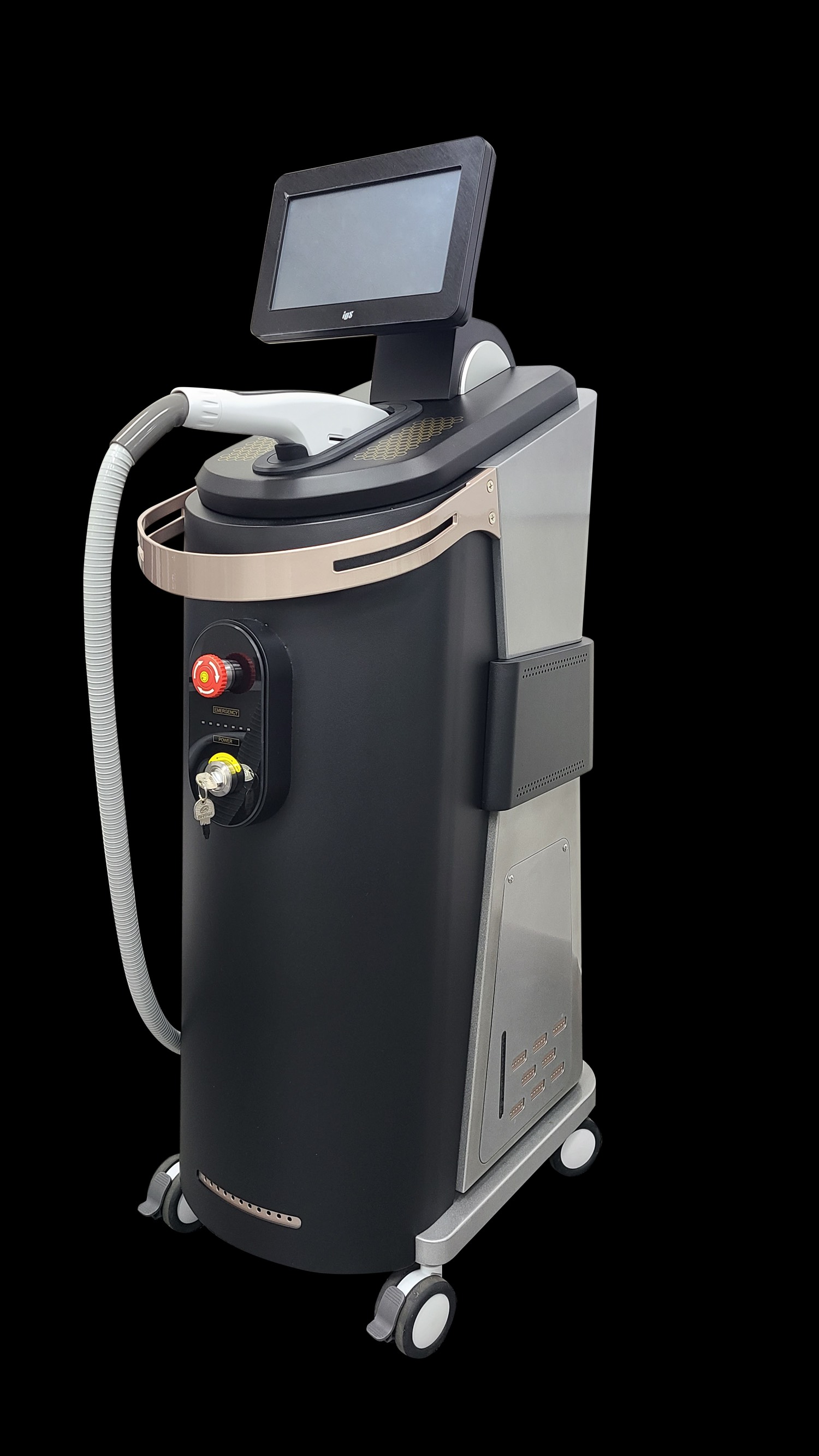
IPL (intense pulsed light) shows up in almost every med spa equipment conversation, next to RF microneedling and fractional lasers. The first question is usually about price. The sticker price is just one part of the answer. What decides whether a professional IPL machine pays for itself is the full cost of ownership, what your market will pay for photofacials and related light treatments, and how many sessions you can realistically book each week.
This guide covers the cost factors that matter for clinic owners, med spas, and dermatology practices. It shows where published industry numbers come from, where SHINY PLUS fits on its specs, and walks through a payback model with every assumption labeled so you can replace it with your own numbers.
The short answer: IPL machine cost varies widely by brand, configuration, and what is bundled, so get an itemized written quote. After the purchase, the recurring costs are mostly flashlamp life, replacement parts, and service rather than a single-use tip on every patient. Payback still depends mostly on how many treatments you book each week.
What drives the cost of a professional IPL machine
Two practices can buy devices in the same category and end up with very different economics. These are the factors behind the gap.
1. Upfront system cost. This covers the console, handpiece or applicator, filter set, starter supplies, training, and sometimes a first year of service. Published estimates vary a lot by brand and configuration. One industry directory notes that its price range for the vascular and pigment category, which includes IPL platforms, is a legacy editorial estimate, not a dated sample of completed transactions, and advises comparing current itemized quotes for the same model and scope (Device Pulse). Get a written quote that lists exactly what is included.
2. Flashlamps, filters, and other replacement parts. IPL devices use a flashlamp to generate broad-spectrum light, then filter the output to select the wavelengths for each target (Device Pulse, IPL glossary). Flashlamps have a finite pulse life. One practice-finance guide puts flashlamp replacements at about $2,000 to $5,000 per unit at 500,000 to 2,000,000 pulse intervals, and lists laser and IPL handpiece tip, fiber, and filter replacements at about $200 to $2,000 per unit depending on the device (AestheticMedGuide). Ask any vendor for the rated pulse life, replacement parts pricing in writing, and whether the lamp or handpiece can be replaced in the field.
3. Per-treatment supplies. Many IPL workflows use coupling gel, eye protection, and disposable covers rather than a sterile tip for every patient. That usually keeps per-session supply cost lower than RF microneedling cartridges, but gel and disposables still scale with volume. Model your own supply kit, and read the service and parts schedule before you accept any "no consumables" claim.
4. Service and maintenance. Warranty length, cooling-system service, repair turnaround, loaner availability, and software support vary by manufacturer and distributor. No single public benchmark applies to every IPL platform, so ask for written service terms and include any annual service fee in your model.
5. Training and protocols. IPL is a light-based medical aesthetic procedure. Plan for provider training time, Fitzpatrick skin-type assessment, consent forms, and medical oversight that meets your state's rules. Skin-type screening and contraindications are part of safe use, and they also affect which patients you can book.
6. Room and footprint. Floor-standing consoles need floor space, electrical capacity, and a treatment room that can run several kinds of treatments. Check voltage and amperage against the quoted unit before you sign. Footprint affects how many treatments you can fit in a day.
7. Your menu price (what patients pay). Patient pricing is not device price. One consumer cost guide reports IPL photofacials at about $300 to $600 per session and IPL hair removal at about $50 to $600 per session, depending on area and treatment type (Thervo). Another guide puts full-face IPL photofacial pricing in the US at about $300 to $600 per session, with a series of 3 to 5 sessions at about $900 to $3,000 (AestheticMedGuide). Price for your own local market.
8. How you pay for it. Paying cash, leasing, and financing all change your monthly numbers. For SHINY PLUS, financing is available through our financing partners. Ask about options when you request pricing.
Cost factor comparison
| Cost factor | Industry picture (published sources) | SHINY PLUS | What to ask any vendor |
|---|---|---|---|
| Upfront system cost | Varies widely by brand and configuration; published category ranges are legacy editorial estimates (Device Pulse) | Request pricing | What exactly is included: filters, handpiece, training, shipping, starter supplies? |
| Flashlamp and parts | Flashlamps about $2,000–$5,000 at 500K–2M pulses; tips, filters, and fibers about $200–$2,000 depending on device (AestheticMedGuide) | Ask during your demo | Rated pulse life? Replacement cost in writing? Field-replaceable? |
| Per-treatment supplies | Often gel and disposables, not a single-use tip on every patient; model your own kit | Ask for a written supply list | What repeats every session, and what only at a lamp change? |
| Typical treatment price (what patients pay) | Photofacial about $300–$600 per session (Thervo; AestheticMedGuide); hair removal about $50–$600 per session (Thervo) | Set by your practice and your market | Which menu items match the indications you will actually offer? |
| Maintenance and service | No single public benchmark; varies by vendor | Ask during your demo | Warranty term, repair turnaround, loaner units, annual fees? |
| Training | Needed for safe IPL use and skin-type screening | Covered in the virtual demo and onboarding conversation | Who trains your providers, and in what format? |
| Financing | Varies by vendor | Available through our financing partners | Who is the lender, and what are the terms in writing? |
Where SHINY PLUS fits
SHINY PLUS is the IDS Lasers micro pulsed light (IPL) system for med spas and clinics. The specs below come from the SHINY PLUS product page.
- Light source: intense pulsed light (xenon lamp).
- Seven filters: 415 · 530 · 560 · 590 · 640 · 690 · 755 nm.
- 140 multi-cell sapphire tip with a 42.6 × 14.3 mm window, designed to keep energy even across the field.
- Contact cooling adjustable to 5 °C.
- Fluence 1–32 J/cm², pulse duration 0.2–16 ms, and repetition rate 1–10 Hz (clinical use up to 5 Hz).
- Pulse sequences: Single · Double · Triple · SHR · Dynamic · Stamp.
- Treatment categories listed on the product page: pigmented lesions, vascular lesions, skin rejuvenation, skin toning, and hair removal.
- Footprint: 360 × 520 × 1,230 mm, 49 kg, electrical 230 V / 6 A, 50/60 Hz.
- Factory-direct from IDS Lasers LLC in Richardson, Texas.
- Financing available through our financing partners.
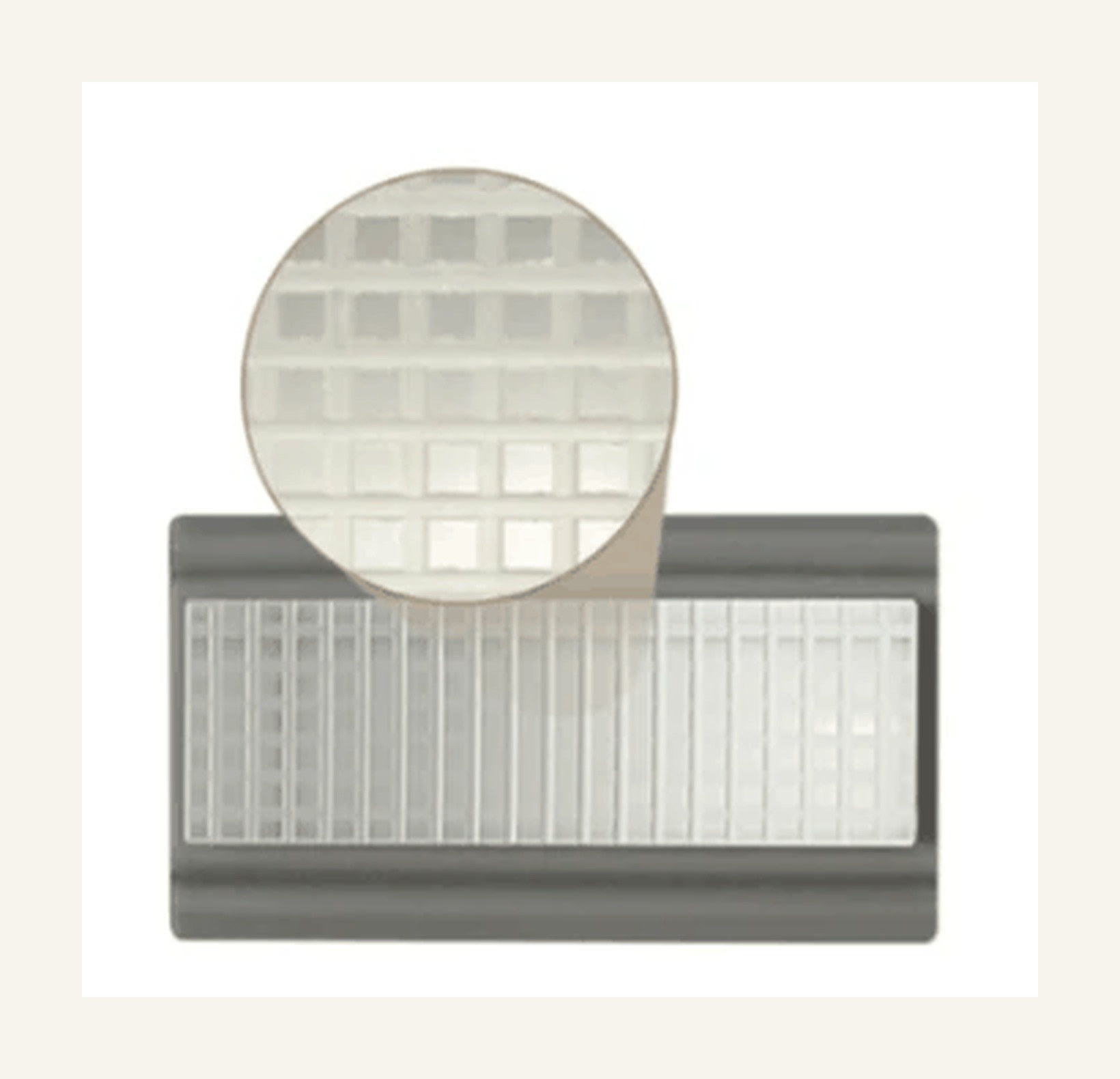
IDS Lasers doesn't publish a SHINY PLUS system price or a tip, filter, or lamp price. For pricing, request pricing or ask during a 30-minute virtual demo.
A worked ROI example you can change
This is a simple payback model, not a forecast. Every input marked [assumption] is a placeholder, so swap in your own numbers. There is no IDS device price and no SHINY PLUS parts price in this model. The system cost stays as "your quoted price."
Inputs
| Input | Value used | Change it to |
|---|---|---|
| Price you charge per photofacial [assumption] | $400 | Your menu price |
| Treatments per week [assumption] | 5 | Your realistic booking volume |
| Coupling gel and disposable supplies per treatment [assumption] | $5 | Your supply cost |
| Flashlamp and parts set-aside per treatment [assumption] | $5 | Your quoted lamp cost ÷ treatments per lamp |
| Card processing fees [assumption] | 3% of price ($12) | Your merchant rate |
| Provider time per treatment [assumption] | $40 | Your loaded labor cost |
| Fixed monthly costs: marketing plus service reserve [assumption] | $400 | Your budget |
| System cost | Your quoted price | Request pricing |
The math
- Profit per treatment = $400 − $5 − $5 − $12 − $40 = $338
- Weekly profit = $338 × 5 treatments = $1,690
- Monthly profit = $1,690 × 52 ÷ 12 = $7,323
- Net monthly profit after fixed costs = $7,323 − $400 = $6,923
- Payback (months) = your quoted system price ÷ $6,923
- Treatments to cover the system = your quoted system price ÷ $338
Net profit at different volumes
| Scenario [assumptions] | Price per treatment | Treatments per week | Profit per treatment | Net per month |
|---|---|---|---|---|
| Conservative | $300 | 2 | $241 | $1,689 |
| Base | $400 | 5 | $338 | $6,923 |
| Busy | $500 | 8 | $435 | $14,680 |
To get payback in months for any row, divide your quoted system price by that row's net per month. The busy row pays back a given quote almost nine times faster than the conservative row.
Volume drives payback more than any other input. Two treatments a week versus eight can turn a payback measured in years into one measured in months. A device you can't book consistently won't pay for itself at any price, so model the conservative row before you sign anything.
What the model leaves out
- Ramp-up. Most practices need time to train providers and build demand. You could model the first two or three months at half volume.
- Financing. If you lease or finance, compare the monthly payment with your net monthly profit instead of using simple payback. Financing is available through our financing partners. Ask for the terms in writing.
- Taxes and depreciation. Ask your accountant how equipment purchases are treated for your practice.
- Package discounts. If you sell series at a discount, use your average realized price per treatment, not your list price.
- Lamp replacement timing. When the flashlamp or handpiece reaches its rated life, the cash outlay comes all at once, even if the model spreads it across treatments.
How to pressure-test a quote
Before you buy any professional IPL system, get these answers in writing:
- The total system price and everything included in it (filters, handpiece, training, shipping).
- Rated flashlamp or handpiece pulse life and replacement cost.
- Warranty length, what it covers, and repair turnaround.
- The labeled indications and the instructions for use (IFU) for the exact model you are quoted.
- Electrical and room requirements (voltage, amperage, footprint).
- What provider training is included.
- Financing options, with the lender and terms in writing.
Then put your own numbers into the model above. If the conservative scenario still works for your practice, you are buying on economics rather than hope. To compare SHINY PLUS with the other IDS platforms, see the platform comparison.
See SHINY PLUS before you decide
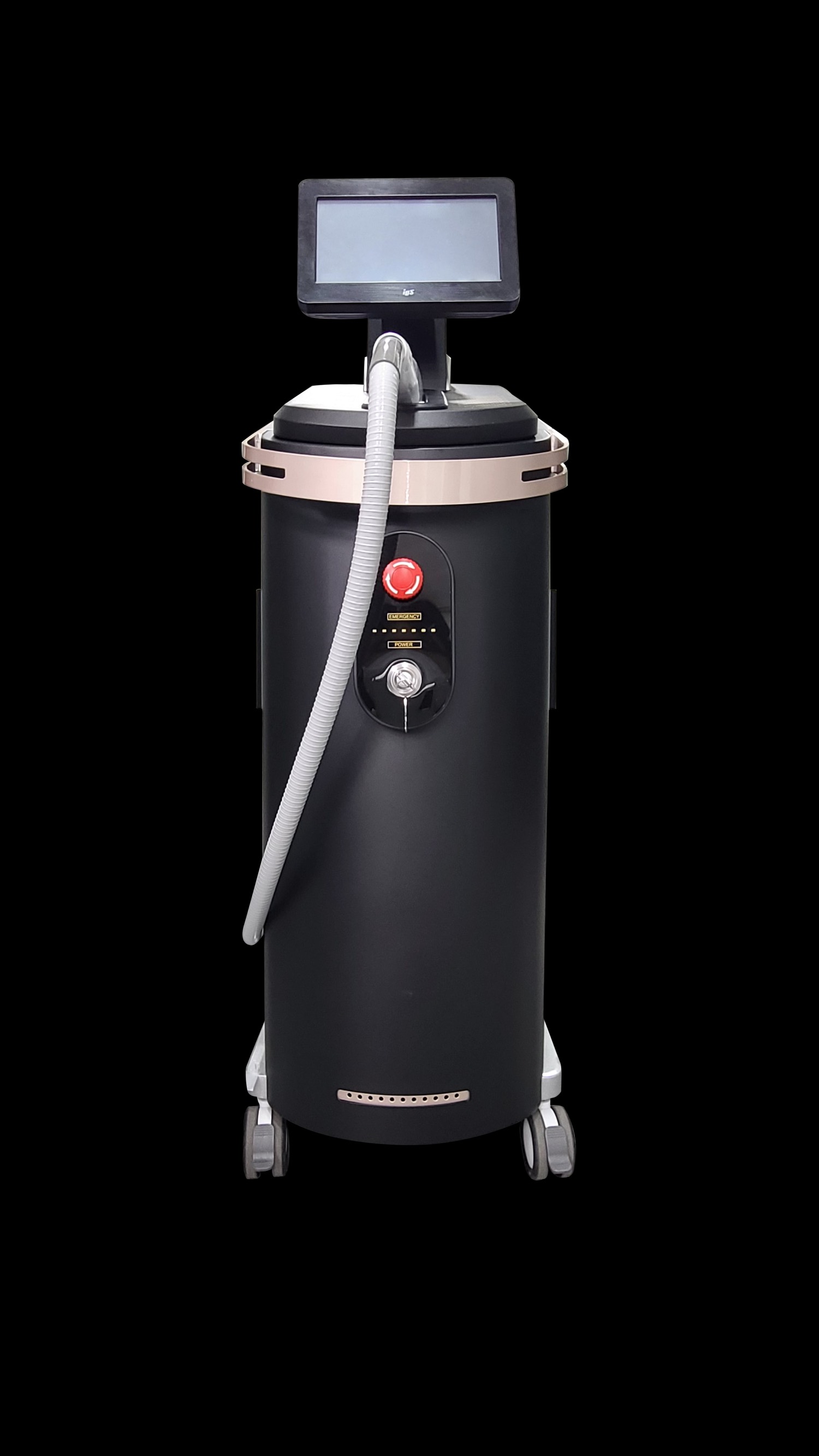
Book a 30-minute virtual demo to walk through the SHINY PLUS console, filters, and sapphire tip, and to talk through the numbers for your practice. You can also see the SHINY PLUS specs, contact us, or call IDS Lasers at (469) 803-6194.
FAQ
How much does a professional IPL machine cost?
It depends on the brand, configuration, and what is included, and published category price ranges are editorial estimates rather than records of completed sales. Get an itemized written quote. For SHINY PLUS, request pricing from IDS Lasers.
What are the ongoing costs of an IPL machine besides the purchase price?
Most practices budget for flashlamp or handpiece replacement after a rated pulse count, coupling gel and disposables, service or warranty renewals, and provider training time. One practice-finance guide puts flashlamp replacements at about $2,000 to $5,000 per unit at 500,000 to 2,000,000 pulse intervals. Ask any vendor for parts pricing and service terms in writing.
Does SHINY PLUS have a published consumable price?
No. The IDS Lasers professional shop and the SHINY PLUS product page don't list a tip, filter, or flashlamp price for SHINY PLUS. Ask for a written parts and supply schedule when you request pricing or book a demo.
How long does it take an IPL device to pay for itself?
Divide the system cost by your net monthly profit. Net monthly profit is your price per treatment minus supply, lamp set-aside, fee, and labor costs, multiplied by your monthly treatment volume, minus fixed monthly costs. Booking volume matters most. In our base example ($400 per treatment, 5 treatments a week, labeled supply and lamp assumptions), net monthly profit is about $6,923, so payback in months is your quoted system price divided by $6,923.
What do patients typically pay for an IPL photofacial?
Published consumer cost guides report about $300 to $600 per session for an IPL photofacial. Hair-removal sessions are listed at about $50 to $600 depending on the area. Prices vary with location, provider credentials, and the area treated.
Is financing available for SHINY PLUS?
Yes. Financing is available through our financing partners. Ask about options when you request pricing or book a demo.
How can I see SHINY PLUS before buying?
Book a 30-minute virtual demo with IDS Lasers. We'll walk you through the console, the filter set, and the sapphire tip, and answer your questions about cost and setup.
For licensed medical professionals. Follow the instructions for use (IFU) for any device you purchase. Industry figures above come from third-party sources and are not IDS Lasers quotes. SHINY PLUS specifications come from the IDS Lasers product page.
Sources
- Device Pulse, "What is IPL (Intense Pulsed Light)?" last updated 2026-09-15: https://thedevicepulse.com/glossary/ipl/
- Device Pulse, "Best Vascular/Pigment Devices (2026)," last updated 2026-09-15: https://thedevicepulse.com/categories/vascular-pigment/
- Thervo, "How Much Does IPL Treatment Cost?" (Jennifer Carlson, September 16, 2024): https://thervo.com/costs/ipl-treatment-cost
- AestheticMedGuide, "IPL Photofacial: What Intense Pulsed Light Treats, What It Cannot, and Who Should Avoid It" (Ran Chen, June 6, 2026): https://aestheticmedguide.com/blog/ipl-photofacial-guide
- AestheticMedGuide, "Aesthetic Device Lease vs Purchase: ROI Model for Med Spas and Practices" (Ran Chen, May 22, 2026): https://aestheticmedguide.com/blog/aesthetic-device-lease-vs-purchase-roi-model
- IDS Lasers, SHINY PLUS product page (specifications): https://idslasers.com/platforms/shiny-plus