Home › Resources › Polynucleotide (PN) Serum Guide for Med Spas
Polynucleotide (PN) Serum Guide for Med Spas
Patients and vendors now ask about "PN serum," "PDRN," and "salmon DNA," and injection studies often get used to sell a bottle. This guide is for med spa owners and medical directors who want a conservative explanation of what a topical polynucleotide (PN) serum is, how it differs from an injectable in the United States, and how Vitten PN 10 fits a professional menu.
This is not a head-to-head of PN versus hyaluronic acid after RF microneedling; that comparison is in PN Serum vs Hyaluronic Acid Serum After RF Microneedling. It is also not a walk-through of building an aftercare program; that is in Serums to Pair with RevaFlux RF Microneedling. We sell RevaFlux and the Vitten serums, so treat this as our view. We stick to the box, the shop page, and sources we actually read, and we make no results claims for Vitten PN 10.
The short version
- PN means polynucleotide. PDRN (polydeoxyribonucleotide) is a closely related term. A systematic review describes both as derived from purified DNA of salmon or trout gonads [S1].
- A topical serum is not an injectable. The studies in that review were injected treatments, not serums [S1]. Vitten PN 10 is a topical skin serum for cosmetic, external use, not an injectable [S5][S7].
- In the US, the category matters. Dermatology Times says injectable PDRN is not FDA-approved for cosmetic use, while a topical product can be sold as a cosmetic when no medical claims are made [S2]. Do not call a serum FDA-cleared or FDA-approved [S4].
- Vitten PN 10 ($119, 0.1 fl oz) lists Sodium DNA extracted from salmon plus a hyaluronic acid crosspolymer. The box describes a "hydrating, improving and revitalizing effect on aged skin," and gives general leave-on directions [S5][S7].
- It can sit next to RevaFlux as an optional add-on, not as part of the device. RevaFlux is FDA-cleared (510(k) K243097). Cartridges are $400 for a box of 8, about $50 per treatment [S8]. When a patient uses any serum is your protocol decision.
What "polynucleotide" and "PDRN" mean
Polynucleotide (PN) and polydeoxyribonucleotide (PDRN) show up in both clinic marketing and research papers. The Lampridou systematic review in the Journal of Cosmetic Dermatology treats them as related products "derived from purified DNA of salmon or trout gonads" [S1]. Dermatology Times describes PDRN as a purified mixture of DNA fragments, often from salmon or trout, and notes that social media often calls this "salmon DNA" [S2].
Those definitions are about the ingredient class, not about any one bottle. Vitten PN 10 uses "PN" in its name. The box lists the ingredient as Sodium DNA extracted from salmon; it does not spell out "polynucleotide" [S7]. We use the product's name and the box wording, and we do not claim a molecular weight, concentration, or mechanism for that ingredient.
For a PN-versus-hyaluronic-acid comparison, including two studies of other (non-Vitten) products after procedures, read PN Serum vs Hyaluronic Acid Serum After RF Microneedling.
Topical serum vs injectable: the distinction that matters
The Lampridou review included nine studies and 219 patients. The authors described the studies as low and moderate quality, noted that injection areas and techniques varied, and called for more rigorous research [S1]. Those results are about polynucleotide injections. That evidence does not transfer to a serum you apply to the skin.
Dermatology Times draws the same line for the US market: injectable PDRN is not FDA-approved for cosmetic use, and topical PDRN in serums, creams, and ampoules is sold as a cosmetic so long as no medical claims are made [S2]. It also argues that standard-size PDRN is unlikely to pass intact skin by passive diffusion, and that any topical benefit may come more from humectants and other ingredients than from PDRN reaching deeper targets [S2]. We point to that reporting so you can set expectations honestly; those are not our claims.
US cosmetic law tracks intended use, not the word "serum." FDA defines cosmetics as articles intended to be applied to the human body for cleansing, beautifying, promoting attractiveness, or altering the appearance. A product intended to diagnose, treat, or prevent disease, or to affect the structure or function of the body, is a drug [S3]. Cosmetic products and ingredients, other than color additives, do not need FDA approval before they go on the market [S4]. Describe a topical PN serum as a cosmetic-use, external-use skin serum. Do not present it as an injectable or a substitute for a clinic injection, and do not call it FDA-approved or FDA-cleared. Keep medical or structure/function claims off it, and follow the box and your medical director's language.
Vitten PN 10 is sold in the IDS Lasers professional shop as a topical skin serum for cosmetic, external use. It is not an injectable [S5]. The 0.1 fl oz box is a serum carton, not a procedure kit. Vitten Hydro Plus, the hyaluronic acid companion product, is dispensed from syringes; those syringes are for dispensing only, not for injection [S6].
What Vitten PN 10 actually is
Vitten PN 10 Skin Serum is a topical serum from Jetema, made in Korea, in a 0.1 fl oz (3 ml) box for $119. Here is what the box and shop page say, and nothing more [S5][S7]:
- Purpose (box): formulated with Sodium Hyaluronate Crosspolymer and Sodium DNA extracted from salmon, for a "hydrating, improving and revitalizing effect on aged skin."
- Ingredients: Aqua, Sodium Hyaluronate Crosspolymer-4, Sodium DNA, Sodium Chloride, Disodium Phosphate, Sodium Phosphate.
- Directions: as a basic step in a skin care routine, take an appropriate amount onto the palm, gently apply to the skin, and massage to help absorption.
- Warnings: for external use only; keep out of reach of children; avoid contact with eyes; discontinue use if signs of irritation and/or rash appear.
- Origin: manufactured by Jetema Co., Ltd., Yongin-si, Gyeonggi-do, Korea. The shop page lists it as a cosmetic-use skin serum [S5].
The box gives general directions only, with no procedure-specific timing and no count of applications per box, so we don't invent either. Divide $119 by the applications you actually get from the box to get a per-patient cost. Ask about fish allergy concerns before you offer it, and put that screening on your handout [S5][S7]. It ships by FedEx from Richardson, Texas, the next business day. Sales are final; damaged or wrong items are replaced at no cost [S5].
How a topical PN serum compares with what clinics often confuse it with
| Topic | Injectable PN / PDRN (what the reviews describe) | Topical PN serum (what Vitten PN 10 is) |
|---|---|---|
| What it is | Injected polynucleotide treatments studied in aesthetic-medicine papers [S1] | A leave-on skin serum for external use [S5][S7] |
| US regulatory picture | Dermatology Times reports injectable PDRN is not FDA-approved for cosmetic use [S2] | Sold as a cosmetic-use topical serum. Cosmetics are not FDA-approved before marketing, other than color additives [S2][S4] |
| Evidence you can point to | Nine injection studies (219 patients); authors rated quality low to moderate and asked for better research [S1] | No study we found tested Vitten PN 10. Dermatology Times is cautious about topical PDRN as a class [S2] |
| How you use it | A procedure under a protocol you do not get from a serum box | Apply as a basic step in a skin care routine, or as your medical director directs [S7] |
| IDS Lasers product | We do not sell a PN injectable | Vitten PN 10, $119, 0.1 fl oz [S5] |
If you also stock an HA-only serum, Vitten Hydro Plus ($129, 3 mL x 3 syringes) lists the same type of hyaluronic acid crosspolymer without the sodium DNA ingredient [S6]. For the ingredient-level comparison and the after-procedure studies we reviewed, use the PN vs hyaluronic acid guide.
What to say, and what to avoid
Describe the serum with the box. "Hydrating, improving and revitalizing effect on aged skin" is the manufacturer's wording, not a result we measured [S7]. Do not tell patients that a topical PN serum regenerates tissue, builds collagen, or matches an injectable "salmon DNA" treatment. Dermatology Times recommends separating those categories in counseling, and attributing any improvement more cautiously, including to other hydrating ingredients in the formula [S2]. Write aftercare and retail language with your medical director. For protocols and cost per patient, see Serums to Pair with RevaFlux RF Microneedling.
Where a PN serum fits with RevaFlux
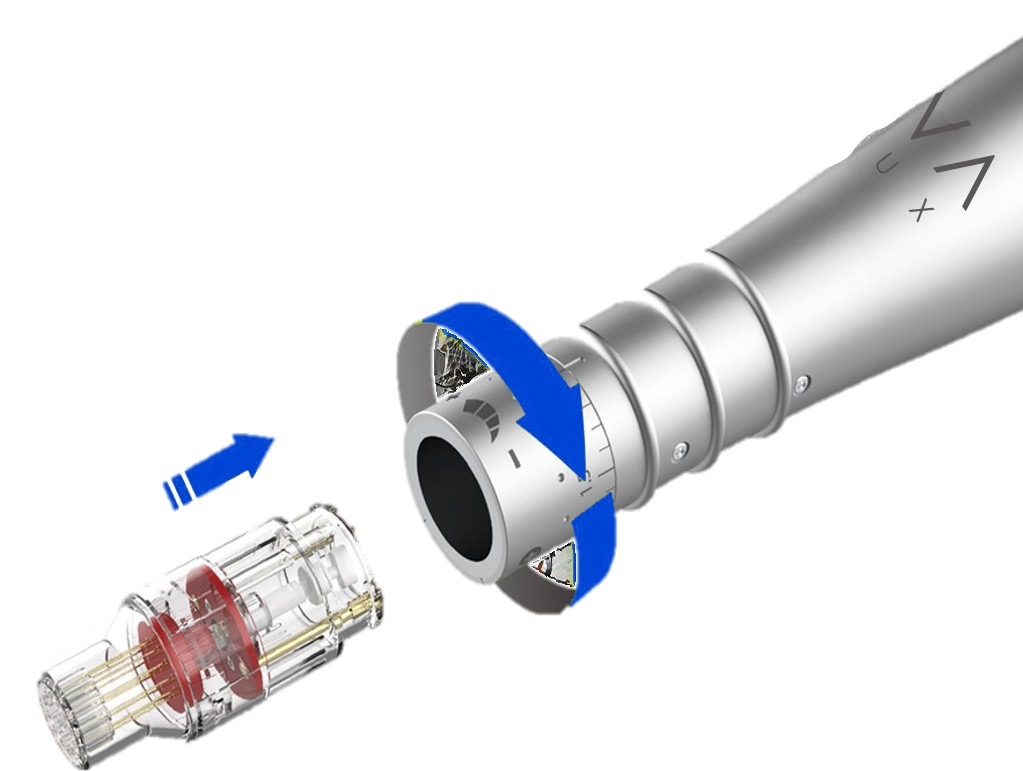
RevaFlux is an FDA-cleared (510(k) K243097) RF microneedling pen for dermatologic electrocoagulation and hemostasis, a prescription (Rx) device [S8]. It uses a 13-pin, 33G, 24K gold-plated, sterile, single-use cartridge, sold at $400 for a box of 8, about $50 per treatment [S8]. A topical serum is an optional add-on, not part of the device.
Whether and when a patient uses Vitten PN 10 afterward belongs in your aftercare protocol, your device IFU, and your medical director's instructions. The box does not set that timing. For the device-side math, see RF microneedling machine cost and ROI. Device pricing depends on configuration and terms. Request pricing and we will send a quote. Financing is available through our financing partners.
Order or book a demo
- Shop Vitten PN 10 Skin Serum, $119
- Shop Vitten Hydro Plus Skin Serum, $129
- See the RevaFlux RF microneedling platform
- Book a 15-minute virtual demo
Call (469) 803-6194 or contact us.
Offering the HA-only Vitten serum? Read our guide: Vitten Hydro Plus Serum Guide for Med Spas
FAQ
What is a polynucleotide (PN) serum?
A polynucleotide (PN) serum is a topical skin serum with a polynucleotide-related ingredient. Reviews describe PN and the related term PDRN as derived from purified DNA of salmon or trout gonads. On Vitten PN 10, that ingredient is listed as Sodium DNA extracted from salmon, together with a hyaluronic acid crosspolymer.
Is Vitten PN 10 an injectable, or the same as a PDRN injectable?
No. Vitten PN 10 is a topical skin serum for external use only, sold in a 0.1 fl oz (3 ml) box. It is not for injection. The systematic review we read evaluated injected treatments, not serums, so those studies do not describe this product.
Is a topical PN serum FDA-approved or FDA-cleared?
No. Vitten PN 10 is sold as a cosmetic-use topical serum. FDA does not require cosmetic products and ingredients, other than color additives, to have approval before they go on the market. "FDA-cleared" is a device term; it applies to RevaFlux (510(k) K243097), not to the serum.
Does a topical PN serum work like the injectable treatments people see online?
The evidence does not show that. The injection studies in the review we read do not apply to a serum, and no study we found tested Vitten PN 10. Dermatology Times reports that any benefit from a topical PDRN product may come more from hydrating ingredients in the formula, and that injectable-equivalent claims are not supported.
What is in Vitten PN 10?
The box lists Aqua, Sodium Hyaluronate Crosspolymer-4, Sodium DNA, Sodium Chloride, Disodium Phosphate, and Sodium Phosphate. It says the Sodium DNA is extracted from salmon. Ask about fish allergy concerns before use.
How much does Vitten PN 10 cost?
Vitten PN 10 Skin Serum (0.1 fl oz) is $119 in the IDS Lasers professional shop. Vitten Hydro Plus (3 mL x 3 syringes) is $129. Prices were checked November 17, 2026 and may change.
How does a PN serum fit with RevaFlux?
RevaFlux is the FDA-cleared RF microneedling treatment. A PN serum is an optional topical add-on. When a patient uses it is a protocol decision for your practice, your IFU, and your medical director.
For licensed professionals. This article is educational, not medical advice, and makes no claims about results from any Vitten product. Follow your device IFU and your medical director's protocols. Shop prices may change.
Sources
- [S1] Lampridou S, Bassett S, Cavallini M, Christopoulos G. "The Effectiveness of Polynucleotides in Esthetic Medicine: A Systematic Review," Journal of Cosmetic Dermatology 2025;24(2):e16721: https://pmc.ncbi.nlm.nih.gov/articles/PMC11845969/
- [S2] Bosslett M. "Social Media Mythbusters: PDRN Serums," Dermatology Times, July 11, 2026: https://www.dermatologytimes.com/view/social-media-mythbusters-pdrn-serums
- [S3] U.S. Food and Drug Administration, "Is It a Cosmetic, a Drug, or Both? (Or Is It Soap?)": https://www.fda.gov/cosmetics/cosmetics-laws-regulations/it-cosmetic-drug-or-both-or-it-soap
- [S4] U.S. Food and Drug Administration, "FDA Authority Over Cosmetics: How Cosmetics Are Not FDA-Approved, but Are FDA-Regulated": https://www.fda.gov/cosmetics/cosmetics-laws-regulations/fda-authority-over-cosmetics-how-cosmetics-are-not-fda-approved-are-fda-regulated
- [S5] IDS Lasers professional shop, Vitten PN 10 Skin Serum, 0.1 fl oz (price checked November 17, 2026): https://shop.idslasers.com/products/vitten-pn-10-skin-serum-3-ml
- [S6] IDS Lasers professional shop, Vitten Hydro Plus Skin Serum, 3 mL x 3 Syringes (price checked November 17, 2026): https://shop.idslasers.com/products/vitten-hydro-plus-skin-serum-3-x-3-ml
- [S7] Vitten PN 10 product box (ingredients, directions, warnings, and purpose wording), photographed by IDS Lasers staff on November 3, 2026
- [S8] IDS Lasers, RevaFlux RF microneedling platform page (510(k) K243097 and cartridge price): https://idslasers.com/platforms/revaflux
- [S9] IDS Lasers, RF Microneedling Machine Cost and ROI for Med Spas: https://idslasers.com/resources/rf-microneedling-machine-cost-roi
- [S10] IDS Lasers, PN Serum vs Hyaluronic Acid Serum After RF Microneedling: https://idslasers.com/resources/pn-serum-vs-hyaluronic-acid-serum-after-rf-microneedling
- [S11] IDS Lasers, Serums to Pair with RevaFlux RF Microneedling: A Med Spa Aftercare Guide: https://idslasers.com/resources/rf-microneedling-aftercare-serums-med-spa